The Hidden Threat
Grubs Destroy Lawns From Underneath — Prevention Is the Only Real Solution
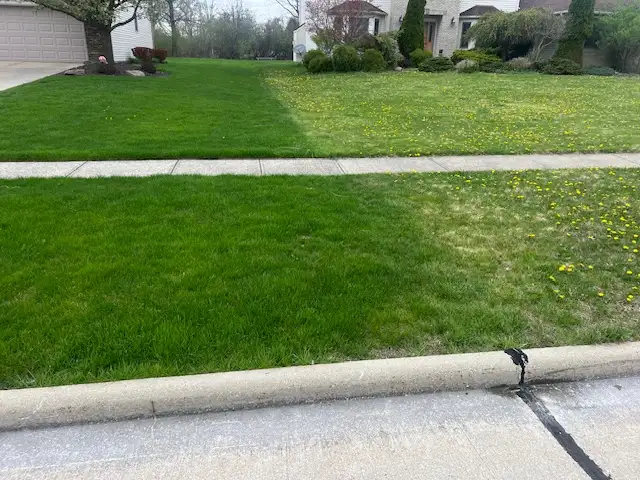
Grub damage is one of the most devastating and frustrating lawn problems in Northeast Ohio. Unlike weeds that you can see and address, grubs feed invisibly below the surface, chewing through grassroots until large sections of turf turn brown, die, and peel up like loose carpet. By the time you notice the damage, the destruction is already done.
White grubs are the larval stage of beetles — primarily Japanese beetles and European chafers in the Cleveland area. Adult beetles lay eggs in lawn soil during June and July. Those eggs hatch into C-shaped larvae that immediately begin feeding on grassroots. A single grub eats enough root material to kill several square inches of turf. Ten or more grubs per square foot — a common infestation level in Northeast Ohio — can destroy an entire lawn section in weeks.
The damage does not stop there. Raccoons, skunks, and birds dig through grub-infested lawns to feed on the larvae, tearing up turf and creating additional destruction that can take months to repair. Preventative treatment applied before eggs hatch is 85% to 95% effective at eliminating grub damage. Curative treatment after damage appears is significantly less effective and far more expensive.
Know Your Enemy
The Grub Lifecycle in Northeast Ohio
Understanding when grubs are active — and when they are vulnerable to treatment — is the key to effective protection. Here is how the lifecycle plays out in the Cleveland area each year.
Late Spring - Early Summer (May - June)
Adult Japanese beetles and European chafers emerge from the soil where they overwintered as mature grubs. Japanese beetles are the metallic green-and-copper beetles you see swarming over roses, grape vines, and linden trees from mid-June through July. They feed aggressively on ornamental plants during the day while mating and laying eggs in nearby lawn soil at night. A single female can lay 40 to 60 eggs over her 4 to 6 week lifespan.
Mid-Summer (July - August)
Eggs hatch within 10 to 14 days. Tiny first-instar grubs immediately begin feeding on grassroots near the soil surface. They grow rapidly, molting through second and third instar stages while consuming increasing amounts of root material. This is the critical window for preventative treatment — products applied before or during early larval feeding achieve the highest kill rates. By mid-August, grub populations can exceed 15 per square foot in untreated lawns across Cuyahoga County.
Late Summer - Early Fall (August - October)
Third-instar grubs are large — up to one inch long — and voraciously hungry. This is when visible lawn damage appears: irregular brown patches, turf that feels spongy underfoot, and sections that peel away from the soil when pulled. Raccoons, skunks, moles, and crows begin digging through the turf to reach grubs, compounding the damage. By September, the window for effective curative treatment is closing — grubs are larger and more resistant to insecticides.
Fall - Spring (October - April)
As soil temperatures drop below 60 degrees, mature grubs burrow deeper into the soil — sometimes 8 to 12 inches — to survive Ohio's winter. They enter a near-dormant state below the frost line. In spring, they migrate back toward the surface to feed briefly before pupating into adult beetles, and the cycle begins again. Grubs overwintering in your soil will produce beetles that lay eggs in your lawn next summer — making annual prevention essential once a property has experienced grub activity.
Warning Signs
How to Tell If Your Lawn Has Grubs
Grub damage often goes unnoticed until it is severe because the insects feed below the visible surface. However, there are reliable signs that indicate grub activity in your lawn. If you observe any of these, contact us immediately for an assessment — early detection can save thousands of square feet of turf.
-
Irregular Brown Patches — Grub-damaged turf turns brown in irregular shapes, not in the even circular patterns typical of fungal disease. The brown areas may appear in late August through October.
-
Spongy, Loose Turf — Walk across the damaged area. If it feels soft and spongy — like walking on a carpet with no padding — grubs have eaten through the root system. Pull a section of brown turf. If it lifts easily like a roll of sod, grubs are the cause.
-
Animal Digging — Raccoons, skunks, and crows will tear up lawns to reach grubs. If you wake up to chunks of turf scattered across your yard overnight, grubs are almost certainly present beneath the surface.
-
Japanese Beetle Activity — Seeing metallic green-and-copper beetles swarming your roses, linden trees, or grape vines in June and July means eggs are being laid in nearby soil. Those beetles are the parents of next month's grubs.
-
Increased Mole Activity — Moles feed primarily on grubs and earthworms. A sudden increase in mole tunnels across your lawn often indicates a grub population large enough to attract these predators.
Prevention vs. Cure
Why Preventative Grub Treatment Wins Every Time
There are two approaches to grub control: preventative products applied before eggs hatch, and curative products applied after damage appears. The differences in effectiveness, cost, and outcome are dramatic.
Preventative treatment is applied in late spring or early summer — typically during Step 3 of our 7-step fertilization program. It creates a treated zone in the soil that kills newly hatched grubs as they begin feeding. This approach achieves 85% to 95% control rates and prevents virtually all visible damage. The cost is a fraction of what lawn repair would require.
Curative treatment is applied after grub damage is already visible — usually in September or October. By this point, grubs are larger, deeper in the soil, and more resistant to insecticides. Curative products achieve only 50% to 75% control rates, and the damage already done still requires overseeding, fertilization, and weeks of recovery time. In severe cases, sod replacement may be necessary at costs of $1 to $2 per square foot.
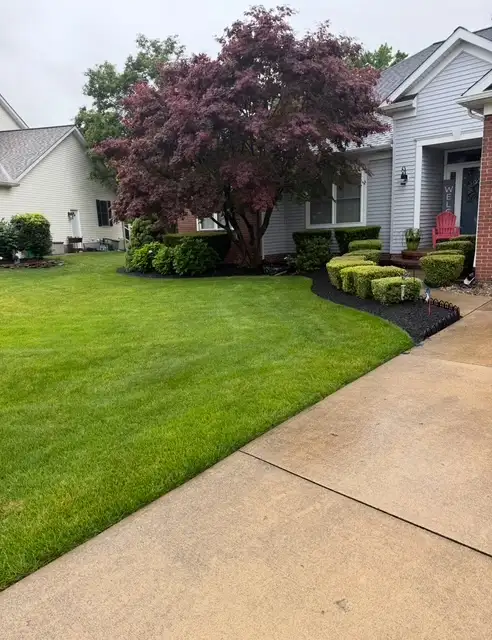
The math is simple: an ounce of prevention costs less than a pound of cure. We recommend grub protection for every lawn in Northeast Ohio that has experienced beetle activity, prior grub damage, or neighbors with grub problems — because beetle populations are mobile and eggs are laid wherever suitable lawn soil exists.
Ohio Risk Factors
Why Cleveland Is a High-Risk Area for Grub Damage
Northeast Ohio consistently ranks among the highest-risk regions for Japanese beetle and European chafer grub damage in the Midwest. Several factors combine to make our area particularly vulnerable.
Warm, Humid Summers
Cleveland's July average temperature of 72 degrees with humidity levels frequently above 70% creates ideal conditions for beetle activity and egg viability. Female beetles prefer laying eggs in moist, warm soil — conditions that describe most irrigated and rain-fed lawns in the metro area during peak laying season.
Established Beetle Populations
Japanese beetles have been present in Ohio since the 1930s and are thoroughly established across all Northeast Ohio counties. Unlike states on the western edge of beetle range, our area has mature, dense populations that produce heavy egg-laying pressure year after year. Every lawn in the service area is within flight range of active beetles.
Ornamental Plant Hosts
The residential landscapes of Greater Cleveland are filled with Japanese beetle host plants — roses, linden trees, grape vines, crabapple trees, and Japanese maples. These plants attract adult beetles from surrounding areas, concentrating egg-laying activity on nearby lawns. Properties with ornamental gardens are at especially high risk.
Clay Soil Moisture Retention
Ohio's clay soils retain moisture longer than sandy soils, keeping the egg-laying zone at ideal moisture levels throughout July and August. Beetle eggs require consistent soil moisture to survive — and our clay soils deliver it naturally without irrigation. This means even unwatered lawns in our area are viable grub habitats.
Cool-Season Grass Vulnerability
Kentucky bluegrass and perennial ryegrass — the dominant turf species in Northeast Ohio — are among the most preferred food sources for white grubs. Their shallow, dense root systems provide exactly the type of feeding habitat that grub larvae seek. Lawns in warmer regions growing deeper-rooted warm-season grasses face lower damage risk per grub.
Neighborhood Effect
Grubs do not respect property lines. When one lawn in a neighborhood goes untreated, it becomes a breeding ground that sends adult beetles across every neighboring property. In established Cleveland-area neighborhoods, uncoordinated treatment creates a cycle where beetles continuously reinfest treated lawns from untreated ones nearby.
Common Questions
Grub Control FAQ
Protect Your Lawn From Grub Damage
Get a free estimate for preventative grub protection. Serving Independence, Cleveland, and 25+ communities across Northeast Ohio since 1997.